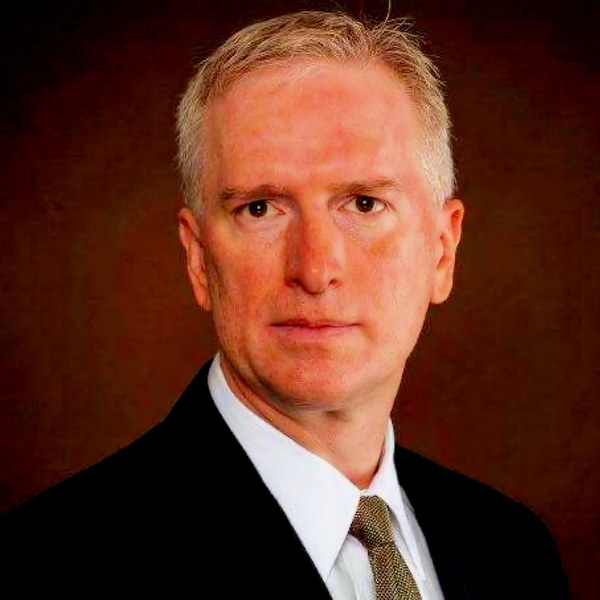
Todd Bloom
Tax attorney and CPA; WSBA Board of Governors, District 6
- Seat
- Position 7 — Stephens seat — challenging Stephens
- Appointing authority
- Not applicable. Challenger, not a sitting judge.
- Background
- 20+ years as a tax attorney, CPA, CFA, and CFP advising high-net-worth families, executives of publicly traded companies, and privately held businesses. Prior decade as Big Four senior manager (tax) and in-house counsel/controller for a financial services firm. U.S. Tax Court bar. Retired Navy LCDR (Reserve, 2018), recalled to active duty after 9/11. Former FINRA arbitrator. Adjunct faculty teaching tax courses.
- Reported endorsements
- Washington State Republican Party recommendation (June 24, 2026) and NFIB Small Business PAC endorsement (July 15, 2026). No bar, union, or elected-official endorsements located beyond these.
- Fundraising
- $14,099 raised as of Sep 9, 2026
What the record actually shows
Facts pulled from public sources: who appointed them, what they did before, what they've said or written, who's backing them. We're not predicting any vote. Why these categories?
-
Professional record — official state voter statement, August 4, 2026 primary
Bloom's own submitted statement confirms his tax-law and tax-accounting background: 'over a decade as tax attorney and senior manager in major accounting firms,' with an LL.M. in Taxation from UW and CPA/CFA/CFP credentials. He served on the WSBA Board of Governors. This is the professional profile of someone whose entire career is on the taxpayer side of state tax practice; combined with his prior twice-Republican congressional runs, it reinforces the read that a Culliton challenge would find him protective of the current doctrine.
-
Campaign live at electtoddbloom.com
Campaign site electtoddbloom.com is live as of July 2026. Frames his pitch around faithful application of the law, constitutional rights, and fairness for every person in the courtroom. Does not editorialize on tax cases directly, consistent with judicial canons.
-
Professional client base
Entire 20-year practice has been built advising high-net-worth families and privately held businesses on tax minimization. Those are exactly the clients who lose if Culliton is overturned and Washington adopts a graduated income tax. UW LL.M. in taxation. U.S. Tax Court bar. A vote to scrap Culliton would be professionally and reputationally incongruous with the entire arc of his career.
-
Explicit prior tax record
His 2016 Vote Smart survey, run during his first congressional bid, supported decreasing income taxes at every bracket, greatly decreasing small business taxes, eliminating inheritance taxes, and explicitly opposing income tax increases. His own words: 'Tax rates DO affect economic activity.' That is the most direct anti-income-tax record any 2026 Supreme Court candidate has put in writing.
-
Republican partisan history
Twice the Republican nominee for U.S. House in WA-6 (2016 general, 2022 primary). Self-described 'fiscal conservative' calling for tax cuts to stimulate growth. The WAGOP is firmly on the anti-income-tax side of the 2026 fight. He has run in two cycles under their banner.
-
Who he is challenging
He filed against Chief Justice Stephens, the author of the 7-2 Quinn v. State majority that upheld the capital gains tax as an excise. Challenging her at all is itself a directional signal.
-
WAGOP recommendation
Added to the Washington State Republican Party's June 24, 2026 additional recommendations for Supreme Court races. Confirms the keep-Culliton coalition is consolidating around him in the Stephens-seat race.
-
On-record: Quinn was 'wrongly decided'
In a July 6, 2026 Center Square Q&A, Bloom said: 'I do believe the decision was wrongly decided. I would have sided with the dissent.' He specifically praised Justice Gordon McCloud's Quinn dissent as 'better reasoned,' 'eloquent in its simplicity and directness, and incredibly well-reasoned,' while calling the Stephens majority's excise-tax reasoning a 'circuitous route' comparable to the U.S. Supreme Court's 'mental gymnastics' in the Obamacare tax/fee case. On Culliton itself: 'It is a constitutional precedent. The Constitution says what it says, and the case has an interpretation.' This is the most explicit on-record income-tax signal any 2026 Supreme Court candidate has offered.
How this candidate is likely to rule, and why.
Todd Bloom is the candidate with the cleanest paper trail in the entire field. He is a tax attorney with a UW LL.M. in taxation whose 20-year practice has been built on advising high-net-worth families and closely held businesses on tax structure. He represents clients before the IRS and state taxing authorities. His professional identity and his client base are exactly the constituency that would lose if Culliton were overturned and Washington adopted a graduated income tax.
On top of that career, he has an explicit prior record. His 2016 Vote Smart survey, completed during his first run for Congress, supported decreasing income taxes at every bracket, greatly decreasing small business taxes, eliminating inheritance taxes, and explicitly opposing income tax increases. His own quote: 'Tax rates DO affect economic activity.' He has twice been a Republican nominee for U.S. House (2016 general, 2022 primary), running as a 'fiscal conservative' calling for tax cuts to stimulate growth.
He is also the only 2026 challenger who has chosen to run directly against the sitting Chief Justice who wrote the Quinn v. State majority upholding the capital gains tax. Challenging Stephens at all is a directional signal.
And in July 2026 he made it explicit: in a Center Square Q&A he stated that Quinn was 'wrongly decided,' aligned himself with McCloud's dissent, and characterized the majority's excise-tax reasoning as 'mental gymnastics.' That is the strongest on-record income-tax signal any candidate in the field has offered.
The convergence of professional identity, written tax record, partisan history, choice of opponent, and now explicit on-record disagreement with Quinn is as close to overdetermined as a judicial lean can be.
Fundraising remains modest ($624 cash plus $4,093 in-kind as of mid-July, $5,553 total per RANGE Media) but has finally picked up, with WAGOP and NFIB endorsements in June and July and a live campaign site at electtoddbloom.com.
A high-confidence keep lean does not translate to a high probability of winning, but the analytical picture on how he would vote is now unusually clear.
-
He is challenging Stephens, not Melody or Diaz
There were five Supreme Court positions on the 2026 ballot. He chose to run against the Chief Justice who authored Quinn. That is itself an ideological alignment statement.
-
The 2024 reset
He ran for Position 2 in 2024 and finished third at 16.9% with $2,539 raised. His 2026 campaign started slow but has picked up momentum: WAGOP recommendation on June 24, NFIB Small Business PAC endorsement on July 15, a Center Square Q&A on July 6 with the strongest on-record tax signal in the field, and a live campaign site at electtoddbloom.com.
-
WSBA Board service
He is a sitting District 6 Governor on the WSBA Board, re-elected through 2029. That gives him a professional standing the typical pro se challenger lacks, but the WSBA Board is non-political and does not signal an income tax position.
-
Textualist self-description
His Ballotpedia statement leans on 'a deep and abiding respect and reverence for our constitution.' That is the standard textualist or originalist framing. Applied to Article VII, that approach maps cleanly onto preserving Culliton, since the 1933 court reached its result by reading 'property' literally.
An analytical read on public signals. Not a prediction of any individual vote.
Questions a voter might ask this candidate
- Will any organized conservative legal or anti-tax group surface to fund him at scale, or does the campaign stay a low-budget operation despite the mid-July endorsement wave?
- Does his constitutional textualism extend to other Article VII cases beyond Culliton, like the 1% property tax cap?
- Why a second Supreme Court bid after a 16.9% finish in 2024, and does the on-record Quinn critique change the media coverage for a candidate previously written off as an ideological long shot?
Phrased to comply with Washington's Code of Judicial Conduct, which prohibits candidates from pledging votes on specific cases or issues likely to come before the court. Methodology questions are permitted.
Sources
- Washington State Voters' Pamphlet (August 4, 2026 primary): Todd A. Bloom candidate statement
- Glein Bloom Accounting and Tax — About
- Ballotpedia — Todd Bloom
- Vote Smart — Political Courage Test (2016)
- WSBA Board of Governors — District 6
- WA Secretary of State — 2024 Position 2 results
- Cascade PBS — Four candidates for Position 2 (2024)
- Ballotpedia — WA-6 2016
- Ballotpedia — WA-6 2022
- PDC — 2026 candidates browser
- The Daily World — WA Supreme Court races (May 12, 2026)
- WAGOP: Additional recommendations for WA Supreme Court races (June 24, 2026)
- Todd Bloom for Justice — Official 2026 campaign site
- The Center Square Q&A: Bloom says justices owe loyalty to Constitution (July 6, 2026)
- Four Questions: Todd Bloom, Position 7 WA Supreme Court (YouTube, July 16, 2026)
- Seattle Times endorsements — WA primary 2026, Supreme Court Position 7
- RANGE Media: 2026 WA Supreme Court election overview (July 22, 2026)
- Are you Todd Bloom or their campaign? Submit a response →