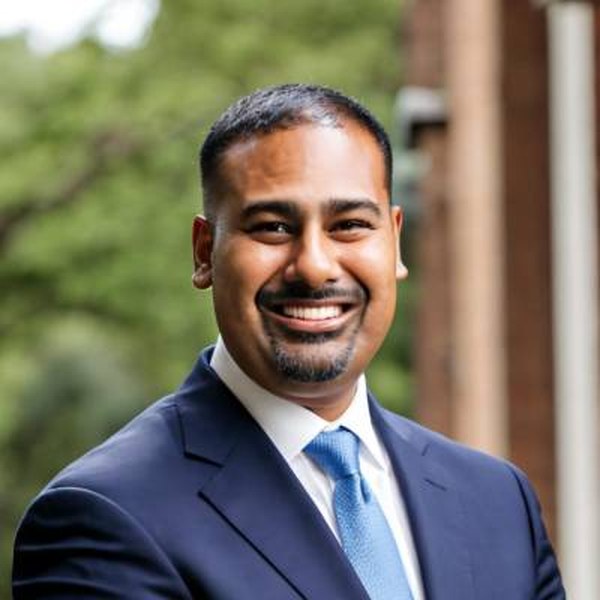
Karim Merchant
Solo criminal defense attorney, K. Merchant Law PLLC (Renton); trial attorney listed at King County Department of Public Defense
- Seat
- Position 7 — Stephens seat — challenging Stephens
- Appointing authority
- Not applicable. Challenger, not a sitting judge.
- Background
- Criminal defense for 18+ years, with 300+ bench and jury trials. Practice spans felony and misdemeanor defense, constitutional rights litigation (Fourth Amendment and Article I § 7), domestic violence defense, drug trafficking, felony firearm offenses, and government misconduct cases. Solo at K. Merchant Law PLLC in Renton, with concurrent listing at the King County Department of Public Defense (since 2008).
- Reported endorsements
- None located. No bar, judicial, union, or elected-official endorsements identified as of June 26, 2026.
- Fundraising
- $7,485 raised as of Jul 29, 2026
What the record actually shows
Facts pulled from public sources: who appointed them, what they did before, what they've said or written, who's backing them. We're not predicting any vote. Why these categories?
-
On Quinn — July 1, 2026 Center Square interview
Explicit on-camera position: 'it flows logically, and I think the Supreme Court got that one wrong' about the Quinn majority. On Justice Gordon McCloud and Justice Johnson's dissent: 'so logical' and 'it just completely debunks everything that the chief justice had wrote.' Frames his own view as 'capital gains are income, incomes are property' — the doctrinal predicate for keeping Culliton's Article VII holding intact. Also frames the excise-vs-property line: 'they are incredibly limited on their ability to tax on property.' This moves the read from neutral commentary to a direct stated position.
-
On Culliton itself (June 15, 2026 video)
Direct statement on his YouTube channel: the 1933 Culliton decision 'rightfully struck down the progressive income tax as unconstitutional.' His critique of the era is procedural and political, not doctrinal — he argues the legislature should have repealed the companion property-tax cut once the income tax fell, leaving schools and government programs short of revenue during the Depression. He does not argue Article VII was misread. That framing maps toward keep, not scrap.
-
On Quinn and Article VII
Walks through Quinn v. State neutrally, summarizing Chief Justice Stephens's 7-2 majority (capital gains as excise) and Justice Gordon McCloud's dissent (capital gains as property at 1% uniform cap) without endorsing either. Accepts the operative architecture: 'If it's property, then it can't be progressive and it can't exceed 1% annually. But if it's an excise tax, then the legislature can tax that shirt to the moon.' Closes the video with a Code-of-Judicial-Conduct disclaimer that nothing 'should be interpreted as a promise about how I would rule in a future case.'
-
On the millionaires-tax referendum and car-tabs ruling
Sharply critical of the May 2026 Heywood v. Hobbs ruling that shielded ESSB 6346 from referendum: says the court 'struck down the people's attempt to invalidate the income tax law through referendum,' 'thus stripping the people of the power to reject laws passed by the legislature.' On the 2020 Garfield County / $30 car tabs case, says the court 'gave less scrutiny to the car tabs case than any other statute, declining to apply the traditional reasonable doubt standard, which has been precedent since long before the Culliton case from 1932.' Both critiques run in the populist / textualist direction that historically lines up with keeping Culliton.
-
Campaign platform language
karim4wa.com framing: 'Justice rooted in the Constitution, grounded in the People.' Quotes Article I §§ 1, 5, 7, and 24 of the WA constitution verbatim — the People's-sovereignty, free-speech, privacy, and right-to-bear-arms provisions. The site does not quote or discuss Article VII (uniformity / taxation). The selection signals an individual-rights / popular-sovereignty frame rather than a fiscal- or structuralist-court frame.
-
Coalition signals
Still sits outside the visible 2026 organized camps. No identified Full Court Press or Federalist Society pipeline, and no SEIU / ACLU PAC / Frame-Pellicciotti endorsement orbit. The 'People vs. courts' framing in his video is rhetorically aligned with Let's Go Washington's grievance about the necessity clause but he is not a Let's Go Washington candidate.
How this candidate is likely to rule, and why.
Karim Merchant moved off the 'no public record' line this month. On June 15, 2026 he posted a ten-minute YouTube explainer titled 'Who Controls Washington's Wallet?' walking through Culliton v. Chase, McCleary, Garfield County (the $30 car tabs case), Quinn v. State, and the May 2026 Heywood v. Hobbs referendum ruling.
He had previously filed a TVW Video Voters' Guide statement on June 3. His campaign site at karim4wa.com is live. The prior read on this page — that he had no working site, no statements, and nothing to evaluate — is no longer accurate.
What the video actually says matters. He calls the 1933 Culliton decision 'rightfully struck down the progressive income tax as unconstitutional.' He argues the bad outcome of that era was the legislature's failure to repeal the companion property-tax cut, not the court being wrong about Article VII.
He treats the Quinn framework as the operative law — 'if it's property, then it can't be progressive and it can't exceed 1% annually' — and presents the majority and McCloud's dissent neutrally. He closes with the Code-of-Judicial-Conduct disclaimer that nothing should be read as a promise about how he would rule.
Where he is genuinely sharp is on the people-versus-court axis. He attacks the May 2026 Heywood ruling for using the necessity clause to block the referendum against the millionaires' tax, saying it strips 'the people of the power to reject laws passed by the legislature.' He attacks the 2020 Garfield County car-tabs ruling for declining to apply the traditional reasonable-doubt standard to voter-approved initiatives. Both critiques run in the populist-textualist direction that historically lines up with keeping Culliton, not scrapping it.
His campaign platform is consistent with that frame. karim4wa.com quotes Article I §§ 1, 5, 7, and 24 — popular sovereignty, free speech, privacy, right to bear arms — and does not quote or discuss Article VII at all. He is not running on the tax-uniformity question the way Birk or Hawk is. He is running on a 'Constitution, grounded in the People' frame.
The honest call now is keep with low confidence, not unclear. He has explicitly called Culliton 'rightfully' decided on the income tax holding and has not flagged any doctrinal problem with it. He has not, however, promised to vote any particular way, and his commentary is heavier on judicial-restraint-versus-the-people themes than on Article VII itself.
He also notes that the substantial majority of his legal writing lives on Facebook, which is harder to audit comprehensively than YouTube or a campaign site, so the read could move with additional disclosure. Coalition-wise he is still unclaimed by either organized camp.
**Update — July 1, 2026 Center Square interview.** He was more explicit on Quinn than he had been in his own June 15 video.
On camera he calls the Quinn decision wrong: 'I think the Supreme Court got that one wrong.' He praises the Gordon McCloud / Jim Johnson dissent as 'so logical' and says it 'completely debunks' the Stephens majority.
His own doctrinal move is the classic keep-Culliton predicate: 'capital gains are income, incomes are property.' That equation — capital gains = income, income = property — is exactly the syllogism that keeps Article VII uniformity binding on any legislative attempt to reach income progressively. It is not a Culliton-scrapping position.
This shifts the confidence read from Low to Medium: he has now stated a doctrinal view on Quinn on the record, not just walked through the two sides neutrally as he did in his June 15 video.
He still has not made a promise about how he would rule in a future case, per the Code of Judicial Conduct disclaimer he attached to both videos.
-
Self-identified constitutional attorney
The YouTube channel and karim4wa.com both describe him as a 'Washington State constitutional attorney with over 18 years of trial experience.' That is a self-styling change from the prior 'criminal defense lifer' framing the public record supported. The substantive constitutional commentary he has produced is consistent with the label — it is genuinely about WA constitutional structure, not criminal procedure.
-
Where his commentary actually lives
From his own June 26 submission to this site: 'The substantial majority of my legal writing and commentary lives on Facebook.' That is unusual for a 2026 judicial candidate and is worth flagging — most of his record on contested constitutional questions exists in a platform that does not surface in standard search. YouTube (@karim4wa) and Instagram (@karim4wa) are secondary.
-
What the platform omits
His campaign site quotes Article I §§ 1, 5, 7, and 24 but does not quote or address Article VII at all. For the candidate running against the Chief Justice who wrote Quinn, on a court that may face a direct Culliton challenge, that omission is itself information — he is not running on the tax-uniformity question in the way Birk or Hawk is.
-
Neither coalition claims him
The June 15 video's posture — accept Culliton's holding on the income tax, accept the Quinn framework, criticize the court for blocking the people's referendum, criticize the court for under-scrutinizing the car-tabs initiative — is closer to a populist-textualist than to either the Full Court Press conservative slate or the Frame-Pellicciotti progressive slate. Neither side has endorsed him.
An analytical read on public signals. Not a prediction of any individual vote.
Questions a voter might ask this candidate
- Does he agree with the Quinn majority that capital gains is an excise, or with the McCloud dissent that it is property capped at 1%?
- If a direct Culliton challenge reaches the court, does he treat Culliton as 'rightly decided' precedent (his June 15 framing) or as open to reconsideration?
- His campaign quotes Article I but not Article VII. Why?
- What does the Facebook record — which he describes as the bulk of his legal commentary — show that YouTube and karim4wa.com do not?
Phrased to comply with Washington's Code of Judicial Conduct, which prohibits candidates from pledging votes on specific cases or issues likely to come before the court. Methodology questions are permitted.
Sources
- Washington State Voters' Pamphlet (August 4, 2026 primary): Karim A. Merchant candidate statement
- The Center Square — 'Capital Gains Tax Faces New Questions From Supreme Court Candidate' (July 1, 2026)
- Karim4WA campaign site
- YouTube — 'Who Controls Washington's Wallet?' (June 15, 2026)
- TVW 2026 Video Voters' Guide — Karim A. Merchant
- K. Merchant Law (firm site)
- Avvo profile
- PDC — Karim A. Merchant (filer 39594)
- YouTube — @karim4wa channel
- Instagram — @karim4wa
- Facebook — Karim A. Merchant
- LinkedIn profile
- Elite Lawyer profile
- National Trial Lawyers profile
- Wikipedia: 2026 Washington Supreme Court election
- Are you Karim Merchant or their campaign? Submit a response →