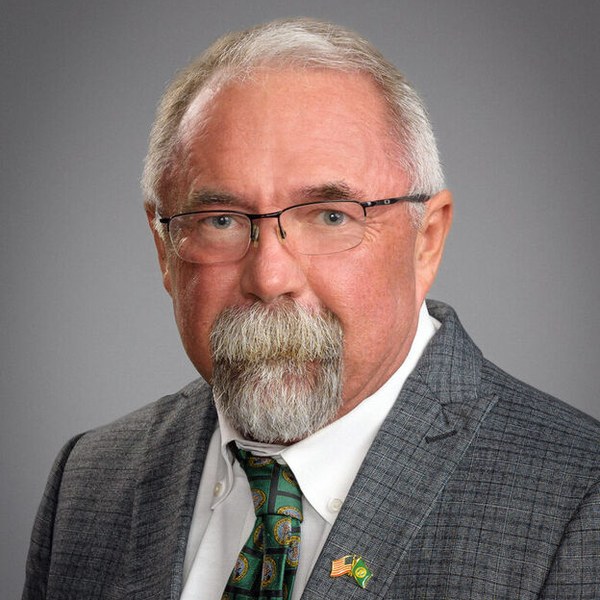
David Stevens
Judge, Mason County Superior Court
- Seat
- Position 3 — Montoya-Lewis seat — challenging Diaz
- Appointing authority
- Elected county judge, not appointed.
- Background
- Trial court judge in Mason County. Private practice before that.
- Reported endorsements
- WA Republican Party recommendation; local bar and law enforcement.
- Fundraising
- $55,965 raised as of Sep 10, 2026
What the record actually shows
Facts pulled from public sources: who appointed them, what they did before, what they've said or written, who's backing them. We're not predicting any vote. Why these categories?
-
Judicial philosophy — official state voter statement, August 4, 2026 primary
Stevens's own submitted statement includes an explicit judicial-restraint frame: 'The duty of the Washington State Supreme Court is to uphold our constitution and to protect our rights and freedoms. Public policy is the province of the political branches and not the courts.' That framing cuts in favor of leaving Culliton alone: reversing 93-year-old precedent to enable a policy the legislature could pursue via constitutional amendment is precisely the kind of judicial policymaking his statement disclaims.
-
How he talks about the law
Cites US Justices Scalia and Alito as influences. Emphasizes constitution as written textualism.
-
The counterintuitive part
If you read Article VII strictly as written and stick with how the 1933 court understood property, you keep the rule. Stevens's methodology entrenches it.
-
Who's backing him
Backed by Republican-aligned judicial infrastructure. His coalition has built its tax politics around the existing rule.
-
His tax record
Trial court judges don't write Article VII opinions. The signal here is methodology and coalition, not case record.
How this candidate is likely to rule, and why.
David Stevens is one of the two WAGOP-recommended candidates in 2026, and the philosophical logic of that recommendation is direct: he explicitly cites Antonin Scalia and Samuel Alito as his judicial heroes, argues that the Washington State Constitution must be interpreted based on 'its text and original meaning,' and has stated publicly that the current court engages in 'ideological rulings and judicial overreach.' Stevens has served as a Mason County Superior Court judge for several years and spent most of his earlier career as a county prosecutor, so his record is entirely in criminal law and local bench work, not in constitutional doctrine or tax law.
The methodological point matters here: a textualist reading of Article VII as it was understood in 1889 and as the 1933 Culliton court applied it, with income defined broadly as property, is the approach most likely to preserve Culliton rather than overturn it.
His coalition also has every political incentive to maintain the 1933 rule; the anti-income-tax funding network built its entire electoral project around that constitutional barrier. Stevens would likely reach the same result as a Keep vote by a different doctrinal path than McCloud, but the destination is the same.
-
Scalia-Alito textualism as a structural Culliton anchor
Stevens has cited Scalia and Alito as his judicial heroes in multiple public forums, including a recorded candidate interview. Scalia-style textualism applied to Article VII Section 1 of the WA Constitution, which defines property as 'everything, whether tangible or intangible, subject to ownership,' provides no obvious basis for excluding income from that definition.
The original public meaning of 'property' in 1889 almost certainly encompassed income; the Culliton court's 1933 ruling is consistent with that reading. A genuine textualist applying this framework has no principled basis for overruling Culliton on methodological grounds.
-
Explicit 'diversity of thought' campaign framing
Stevens has stated that the court lacks 'diversity of thought' and that he is concerned about the effects of gubernatorial appointments dominating the court's composition. That framing is a direct signal: it positions him as an ideological counterweight to the Ferguson-Inslee bloc, not as a neutral institutionalist.
WAGOP's official recommendation, the first time the party broke from tradition to recommend candidates for the court, cited the pending income tax lawsuits as among the specific reasons these seats matter. Stevens is the WAGOP's vehicle for Position 3.
-
Over 200 criminal jury trials but no tax or constitutional record
Stevens's campaign materials emphasize over 200 criminal jury trials and a deep understanding of evidence, procedure, and jury decision-making. That record makes him a credible candidate for the trial-court perspective he says the Supreme Court needs. It does not provide any direct signal about how he would approach Article VII, the uniformity clause, or the precedential weight of Culliton. For this particular race, the doctrinal inference runs entirely through methodology and coalition, not through any prior ruling on the relevant question.
-
Position on constitutional amendment vs. judicial reinterpretation
Stevens's campaign site states explicitly that 'any change to the Washington State Constitution must be performed via constitutional amendment, not through judicial re-interpretation of the Constitution or court precedent.' If taken seriously, this principle applies with particular force to overruling Culliton: the 1933 ruling was itself a constitutional interpretation, and a court that scraps it without a constitutional amendment would be doing precisely what Stevens says courts should not do.
His position thus locks him into a strong keep posture on ESSB 6346 by his own stated methodology.
An analytical read on public signals. Not a prediction of any individual vote.
Questions a voter might ask this candidate
- If the original public meaning of property in 1889 was different from what the 1933 court said, which controls?
- How should a textualist approach a ruling that has shaped tax policy for nine decades?
Phrased to comply with Washington's Code of Judicial Conduct, which prohibits candidates from pledging votes on specific cases or issues likely to come before the court. Methodology questions are permitted.
Sources
- Washington State Voters' Pamphlet (August 4, 2026 primary): David Stevens candidate statement
- Mason County Journal coverage
- Candidate interview (video)
- WAGOP recommendation
- Judge Stevens for WA campaign site
- The Urbanist: Progressives and dark-money-backed conservatives vie for WA Supreme Court
- Daily World: WA Supreme Court races shape up as income tax case looms
- Clark County Today: WA Supreme Court cases could decide fate of income tax
- Columbia Basin Herald: WA Supreme Court races could decide fate of income tax
- Are you David Stevens or their campaign? Submit a response →